

One of the most common questions I hear from students who are eager to start a meditation practice is, “What do I do with my hands?”
While hand placement doesn’t need to be overthought, when your hands are engaged with intention, the meditation becomes infused with purpose.
Mudras are ancient hand gestures that can invite specific energies, strengthen meditative focus, and help you to tap into something beyond yourself.
Whether you’re new to meditation or deepening your practice, learning these sacred hand positions can transform your inner experience.
My purpose in sharing this guide is to help you explore and understand some of the essential mudras, what they mean, and how to practice them with purpose.
Introduction to Meditation Hand Poses
Mudras are like signposts for the subtle body. They are gestures that guide your energy in specific ways. When you bring your hands into a conscious shape during meditation, you’re not just aligning fingers—you’re aligning intention with outcome.
From grounding to energizing, each mudra serves a purpose. They can serve as a compass to navigate mental noise, support physical healing, anchor or connect you.
What Are Mudras and How They Work
The word mudra comes from Sanskrit, meaning “seal,” “gesture,” or “mark.” These symbolic hand positions are rooted in ancient yogic traditions, especially within Hinduism, Buddhism, and Jainism. Practitioners believed that hands were a map of the energy body and that different finger combinations could “seal” in specific states of consciousness or direct prana— your vital life force—along nadis (subtle energy channels).

For example, Gyan Mudra, the gesture of knowledge, connects the thumb (representing divine consciousness) with the index finger (individual self). This simple touch is believed to harmonize intellect and intuition, creating a state of receptive wisdom.
Like acupuncture or reflexology, mudras are based on the belief that the body contains a network of energy. When we activate this network consciously, we stimulate physical, emotional, and spiritual shifts.
Benefits of Using Mudras in Meditation
Using mudras in meditation can open the door to a more connected, embodied, and impactful practice. Here are some of the most widely reported benefits:
- Improves focus and concentration – Certain mudras help to settle the mind and sharpen attention, particularly when paired with breathwork or mantra.
- Reduces stress and anxiety – By engaging the parasympathetic nervous system, mudras can calm the body and soothe mental turbulence.
- Balances energy flow (chakras) – Each finger corresponds to an element and chakra. Mudras help to regulate and harmonize these energy centers.
- Enhances mind–body connection – Placing awareness in the hands draws your focus into the present, joining your physical and subtle bodies together.
- Deepens spiritual awareness – Some mudras open the heart or crown chakras, facilitating access to higher states of consciousness and connection.
- Supports physical healing – Through subtle energy activation, mudras have been used to assist digestion, circulation, and immunity.
7 Essential Mudras to Deepen Your Practice
Different moods, goals, and seasons of life call for different mudras. Here are seven foundational gestures to explore:
1. Gyan Mudra (Gesture of Knowledge)

How to do it: Touch the tip of your index finger to the tip of your thumb. Keep the other three fingers together and extended. Rest your hands on your knees with palms facing up.
Meaning & Benefits:
This mudra sharpens the intellect, boosts memory, and promotes mental clarity. It’s ideal for students, creatives, and anyone needing a focus reset. It’s also known to stimulate the root chakra and cultivate a sense of calm curiosity.
2. Chin Mudra (Gesture of Consciousness)

How to do it: Touch the index finger to the thumb like in Gyan mudra, but rest the hands palm-down on the thighs.
Meaning & Benefits:
Subtle but profound—Chin mudra emphasizes grounding and inner stillness. The downward palms signify surrender and introspection. This mudra gently invites awareness inward, making it ideal for early morning or reflective meditation sessions.
3. Dhyana Mudra (Gesture of Meditation)

How to do it: Place the right hand palm-up over the left in your lap. Touch the tips of the thumbs together to form an oval shape.
Meaning & Benefits:
This classic Buddhist mudra fosters deep concentration and inner harmony. The circle formed by the thumbs symbolizes completeness, while the nested hands create a quiet container for the breath. Use this mudra during longer, seated meditations.
4. Anjali Mudra (Prayer Pose)

How to do it: Press your palms together at the center of your chest, thumbs touching the sternum.
Meaning & Benefits:
A universal gesture of respect and gratitude, Anjali mudra balances the right and left hemispheres of the brain. It’s a beautiful way to start or end a practice, or to pause during moments of decision-making. This mudra connects with the heart chakra, enhancing emotional balance and compassion.
5. Prana Mudra (Gesture of Vital Energy)
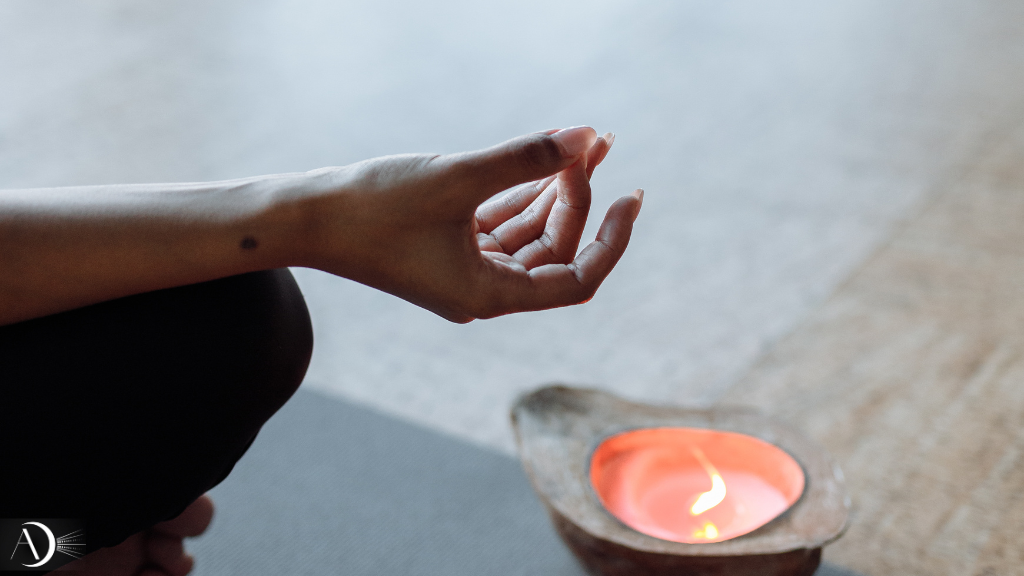
How to do it: Touch the tips of your thumb, ring finger, and pinky together; keep the other fingers extended and relaxed. Palms face upward on your knees.
Meaning & Benefits:
This energizing mudra is known to awaken dormant energy and restore vitality. It supports immunity, increases enthusiasm, and helps to combat fatigue. Try this when you’re feeling sluggish or uninspired—especially in the late afternoon.
6. Apana Mudra (Gesture of Cleansing)

How to do it: Touch the tips of your thumb, middle finger, and ring finger together. Keep the other fingers straight. Palms up.
Meaning & Benefits:
Apana mudra facilitates elimination—physically, emotionally, and energetically. Great for detoxification, letting go of what no longer serves you, and grounding. It activates the lower chakras and aids digestion, making it a helpful addition to evening or post-meal meditations.
7. Bhairava Mudra (Gesture of Courage)

How to do it: Rest your right hand atop the left (or left over right if you’re working with feminine energy), palms up, in your lap.
Meaning & Benefits:
This powerful mudra invokes protection, inner strength, and balance. It’s often used in Tantric practices to unite opposing forces—masculine and feminine, light and shadow. Reach for this mudra in times of stress, fear, or emotional overwhelm.
Tips for Choosing and Practicing Your Mudras
You don’t have to master all seven at once. Instead, let your intuition guide you toward the mudra that fits your current energy.
- Start small: Begin with 5–10 minutes of mudra meditation daily.
- Stay consistent: Repetition builds the energetic pathways. Try the same mudra for 21 days in a row.
- Sit comfortably: Use a cushion or block under the hips. Align your spine and soften your gaze.
- Pair with intention: Match your mudra with a breath pattern, mantra, or visualization for deeper resonance.
- Be patient: Some mudras feel natural; others may cause finger fatigue. Take breaks or stretch between sessions.
Frequently Asked Questions
Depending on who you ask, the answer may vary. Generally, to me, Gyan mudra is practiced with palms facing up, inviting divine insight as an opportunity to receive. Chin mudra, with palms down, promotes grounding and introspection.
Start with 5–10 minutes. Some traditions suggest 15–45 minutes for therapeutic benefit, but even a few breaths can begin to shift your energy.
Yes. All seven are beginner-friendly and don’t require special training. Just be gentle with your hands and avoid strain.
Apana mudra and Dhyana mudra are especially calming. Pair with slow breathing for optimal results.
Whether you’re meditating for clarity, energy, or healing, your hands can become sacred tools for transformation. Mudras are quiet, ancient, and incredibly powerful when practiced with intention.