Ah, the pelvic floor. Such a mystery for so long, simply because many of us were never taught how to actually feel this part of the body, let alone care for it. I’m not going to overcomplicate this for you.
Yoga for the pelvic floor is about reconnecting breath, awareness, and gentle movement to a set of muscles that quietly hold so much of our daily life together.
This blog walks through tight pelvic floor muscles, strengthening, relaxation, dysfunction, safe practice tips, and a handful of beginner-friendly poses. I won’t promise a cure to whatever brought you here. What I can offer is a starting point.
Is Yoga Good for the Pelvic Floor?
The short answer to this question is yes, when practiced thoughtfully, yoga can be helpful to your pelvic floor. We don’t isolate one muscle group; we weave together breath, gentle movement, relaxation, mobility, and body awareness. This combined approach matters because pelvic floor ‘issues’ aren’t one-size-fits-all.
Some people come to yoga with a desire to build strength and support. Others, especially those with tight or hypertonic pelvic floor symptoms, need the opposite: release, softening, and permission to let go.
Yoga and pelvic floor health intersect most powerfully when we stop assuming we’re all “weak” down there and start listening to what our unique bodies are asking for.
What Does the Pelvic Floor Do?
Think of the pelvic floor as a supportive hammock of muscles stretching from your pubic bone to your tailbone. It cradles the bladder, bowel, and uterus or prostate, and it works in partnership with your deep core to stabilize your whole midsection.
Day to day, these muscles are involved in bladder control, bowel control, sexual function, posture, breath, and how you move through the world: walking, lifting, even laughing.
Most of us never think about this system until something feels off. That’s common because pelvic floor health isn’t something we’re taught to tune into, which is exactly why yoga poses for pelvic floor muscles can feel like a revelation once you start paying attention.
Tight vs Weak Pelvic Floor: Why the Difference Matters
Here’s something I wish more people knew before they started online searches for “pelvic floor exercises”: not every pelvic floor issue is a strength issue.
Some of us walk around with pelvic floor muscles that are tight, overactive, or hypertonic, clenched from stress, from years of “sucking it in,” from nervous system patterns we didn’t even know we were holding.
For these bodies, more squeezing and strengthening can make symptoms worse, not better.
Others need more support, coordination, and strength underneath them. So, yoga for ‘pelvic floor tightness’ looks completely different from yoga for ‘pelvic floor strength’ — and this differentiation is important. It’s also why the poses that follow are grouped by what your body might actually need, not a generic checklist.
How Yoga May Support Pelvic Floor Health
Yoga therapy for pelvic floor concerns tends to work along multiple pathways. Did you know there is a fascial relationship between your pelvic floor and your chief breathing muscle, the diaphragm? Yeah, they are structurally linked by deep connective tissue.
Diaphragmatic breathing invites the pelvic floor to move naturally in rhythm with the breath, expanding on the inhale, softening on the exhale. Hip-opening poses can ease chronic tension that often surrounds the pelvis.
The nervous-system-calming quality of a slower practice may help release the kind of gripping that builds from stress alone. Postural awareness, core coordination, and controlled strengthening can, for some bodies, build solid support over time.
I want to be honest with you: yoga can support pelvic floor health, but it isn’t a replacement for pelvic floor physical therapy, especially if your symptoms are persistent or significant. Think of this practice as a companion to professional care.
Best Yoga Poses for Pelvic Floor Relaxation and Strength
The ‘best’ yoga poses for your pelvic floor really depend on your goals. Some shapes will release tightness; others build strength and coordination from the ground up. As you move through the poses below, go slowly.
Use props generously… bolsters, blankets, and blocks can make all the difference. Breathe deeply throughout, and if anything causes pain, pressure, or real discomfort, please press pause. This is truly a practice of listening, not pushing.

Diaphragmatic Breathing for Pelvic Floor Relaxation
This is where I’d suggest starting, especially if tightness is part of your story. Lie down or sit somewhere comfortable, with one hand resting on your belly. Inhale slowly, letting the breath fill your belly and ribs rather than staying high in your chest. Exhale slowly, without gripping or forcing the air out. Notice how the pelvic floor naturally softens on the inhale. This simple practice is often the gentlest entry point into pelvic floor awareness and nervous system relaxation.


Child’s Pose for Tight Pelvic Floor Muscles
I call Child’s Pose the home base of yoga. Kneel, sit your hips back toward your heels, and fold your torso forward over your thighs, arms extended or resting by your sides. Knees can be together or apart. If your knees feel cranky, tuck a thin blanket or padding under them for support. Let your breath move into your back and ribs as you rest. This shape can offer a wonderful sense of release through the lower back, hips, and pelvic floor.

Happy Baby Pose for Pelvic Floor Release
Happy Baby is playful in name but powerful in effect. Lying on your back, draw your knees toward your chest and hold the outer edges of your feet or the backs of your thighs, whichever is accessible. Breathe slowly here. There’s no need to pull your knees toward the floor; this is about comfortable release, not a deeper ‘stretch.’

Reclined Bound Angle Pose for Pelvic Floor Softening
This one will help you to unclench. Lying on your back, bring the soles of your feet together and let your knees fall open, supporting them with pillows, blocks, or wedges if there’s any pulling sensation or discomfort in the inner thighs or hips. Breathe slowly and let your whole body settle. I often recommend this pose when the body feels tense, guarded, or simply overstimulated.


Cat-Cow Pose for Pelvic Floor Awareness
Cat-Cow is a gentle, moving meditative journey for the spine, pelvis, and pelvic floor. On an inhale, drop your belly and lift your gaze, and spread your collarbones into Cow. On an exhale, round your spine, tuck your chin, and curl the tailbone into Cat. Move slowly through five to ten rounds. This isn’t super physically demanding, but it can teach you a lot about where you’re holding tension and how your pelvis moves with breath.

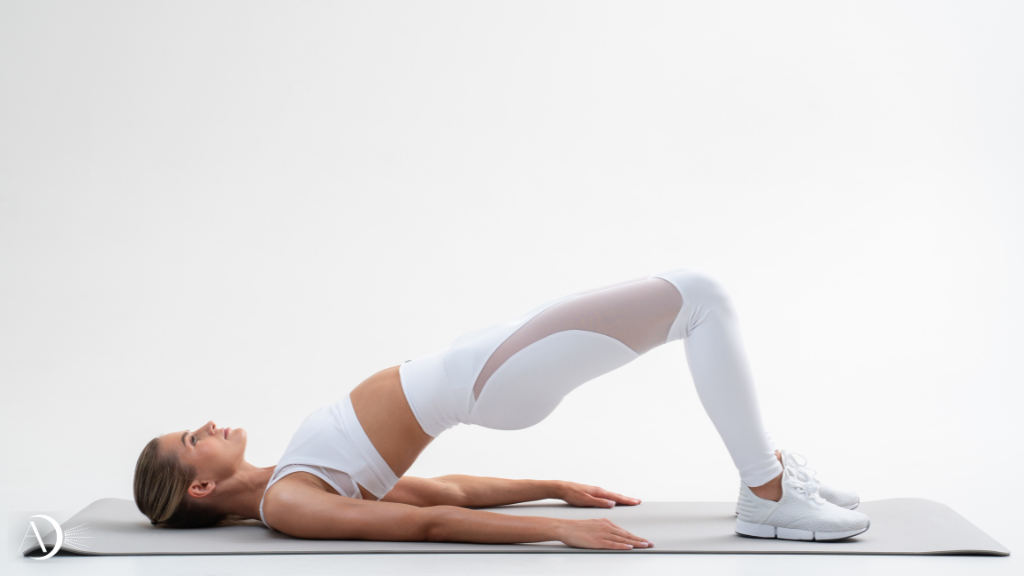
Bridge Pose for Pelvic Floor Strength and Support
When strength is the goal, Bridge Pose is a wonderful place to begin. Lying on your back with knees bent and feet flat and parallel to each other, press into your feet and lift your hips, breathing steadily. If you’re newer to this pose or notice tightness, modify by placing a block or bolster under your hips for support rather than holding the lift actively.

Garland Pose for Hip Mobility and Pelvic Floor Awareness
Garland Pose, a deep squat, can support hip mobility and pelvic floor awareness. If a full squat isn’t accessible, sit on a block (or two stacked blocks), slide a folded blanket under the heels, or use a wall behind your spine for support. One important note: if you experience prolapse-related pressure, hip pain, or pelvic discomfort, this is a pose to approach with real caution or skip altogether. Never force depth here. Optional modification: Goddess pose, a wide-legged squat with your hips and feet turned slightly outward in external rotation.
Yoga Poses by Pelvic Floor Goal
| Goal | Poses | Why |
|---|---|---|
| Relaxation | Diaphragmatic Breathing, Child’s Pose, Reclined Bound Angle | Softens gripping and calms the nervous system |
| Strength | Bridge Pose, supported Bridge, gentle core work | Builds coordinated support without over-gripping |
| Releasing Tightness | Happy Baby, Reclined Bound Angle, Child’s Pose | Softens clenching |
| Dysfunction support | Cat-Cow, breathwork, restorative poses | Builds awareness without strain |
| Prolapse-friendly | Reclined poses, supported Bridge | Avoids downward pressure or forcing |
| Beginner practice | Cat-Cow, Child’s Pose, breathing | Low-risk entry points for new practitioners |
10-Minute Yoga Routine for Pelvic Floor Health
If you only have ten minutes, here’s a simple sequence to try.
Start with two minutes of diaphragmatic breathing to settle in. Move into two minutes of Cat-Cow to warm up the spine and pelvis. Rest in Child’s Pose for two minutes while maintaining focus on breathing into the low belly and tissues around the lower back.
Transition into Reclined Bound Angle (Butterfly) for two minutes of softening. If strength is your focus today, add a minute or two of Bridge Pose here; otherwise, skip straight to stillness.
Close with a few minutes in Savasana, letting everything settle. You can keep this routine gentle for relaxation, or layer in more active Bridge work when you desire strength.
Yoga for Pelvic Floor Tightness and Hypertonic Pelvic Floor
If you recognize symptoms like pelvic pressure, urgency, constipation, pain with intimacy, hip tension, or a general difficulty relaxing “down there,” you may be dealing with a tight or hypertonic pelvic floor.
For this pattern, relaxation, breathwork, supported poses, and slow stretching are usually far more appropriate than intense strengthening work.
In fact, jumping straight into Kegels or core-focused strength training can sometimes deepen the very tightness you’re trying to resolve. This is where shapes like Child’s Pose, Happy Baby, and Reclined Bound Angle become so valuable because they teach the body that it’s safe to soften.
If these symptoms are persistent or significantly affecting your lifestyle, please reach out to a pelvic floor physical therapist. Yoga can support your process, but the practice works best when paired with professional guidance.
Yoga for Pelvic Floor Strengthening
Strengthening the pelvic floor isn’t just about squeezing harder or more often. It’s a more nuanced conversation involving breath, glute strength, hip stability, posture, and controlled, mindful movement.
Poses like Bridge Pose, Tree Pose, and Chair Pose build strength through the legs, glutes, and core that indirectly supports the pelvic floor’s work.
But over-gripping is a common trap. If you notice yourself clenching throughout the day, even outside of practice, that’s worth paying attention to. True strength includes the ability to release fully between efforts. A muscle that can’t relax isn’t necessarily strong; it’s just stuck ‘on.’
Safety Tips Before Practicing Pelvic Floor Yoga
Before diving into any pelvic floor yoga practice, I want to share a few safety notes. If you’re navigating pelvic organ prolapse, pregnancy, postpartum recovery, recent surgery, severe pelvic pain, endometriosis, urinary symptoms, bowel symptoms, or pain during sex, please speak with a healthcare provider or pelvic floor physical therapist before starting.
They can help you tailor this practice to your specific body and history. Beyond that, keep the practice gentle. Use props, breathe slower than you normally would, and let your exhale be as unforced as your inhale. Always stop if something worsens. There’s no need to push through pain in the name of progress.
Final Takeaway
At its heart, yoga for pelvic floor health is about strength, relaxation, breath, mobility, and body awareness in tandem, not one dominating the others. Tight and weak pelvic floor muscles require different approaches, so notice which conversation is showing up in your body right now.
Save this routine for a slow morning. Watch a guided class if you want more support. Or, if you’re ready for personalized guidance, speak with a pelvic floor specialist who can walk this path alongside you. Your body has been holding a lot. This practice is one small way to help you release a little, bit by bit.
FAQs About Yoga for Pelvic Floor
How often should you do pelvic floor yoga?
Most people benefit from a gentle routine three to five times a week, though even five minutes of daily diaphragmatic breathing can be meaningful.
Is yoga or Pilates better for pelvic floor health?
Neither is universally “better.” Yoga tends to emphasize breath, relaxation, and mobility, while Pilates often leans more toward controlled strengthening. Many people benefit from a blend of both.
Can men do yoga for pelvic floor health?
Absolutely. Pelvic floor yoga supports bladder control, core stability, and prostate-related health for men just as it does for women.
Can chair yoga help the pelvic floor?
Yes, seated breathwork, gentle pelvic tilts, and modified Cat-Cow variations in a chair can be a great accessible starting point.
When is pelvic floor yoga not enough?
If symptoms are persistent, worsening, or significantly impacting daily life, it’s time to bring in a pelvic floor physical therapist or healthcare provider alongside your practice.